For your working day
- Past preferences are a starting point; check today's response.
- Choosing, listening and observing are forms of participation.
- An activity can end without a finished product.
Begin with the person
Person-centered care considers past and present preferences, values and abilities. A former hobby offers a possible starting point, not a requirement. Current responses matter. Quiet company may be welcome; an activity someone has never liked need not become enjoyable because it is offered in care.
Adapt the task while preserving a role
Choose a familiar task suited to current ability. Offer a simple starting point and help with difficult parts. Watch for interest, fatigue or frustration; adapt or stop as needed. Enjoyment and participation matter more than a perfect finished result.
Based on: Alzheimer's Association · Activities
Offer music and art thoughtfully
Preferred music can offer connection when conversation is difficult. Keep the volume comfortable and reduce competing sound. For art, use safe materials and adult-appropriate themes. Choosing colors or viewing an image together can count as participation; singing or completing a picture is optional.
Based on: Alzheimer's Association · Art and Music
Invite memories without testing
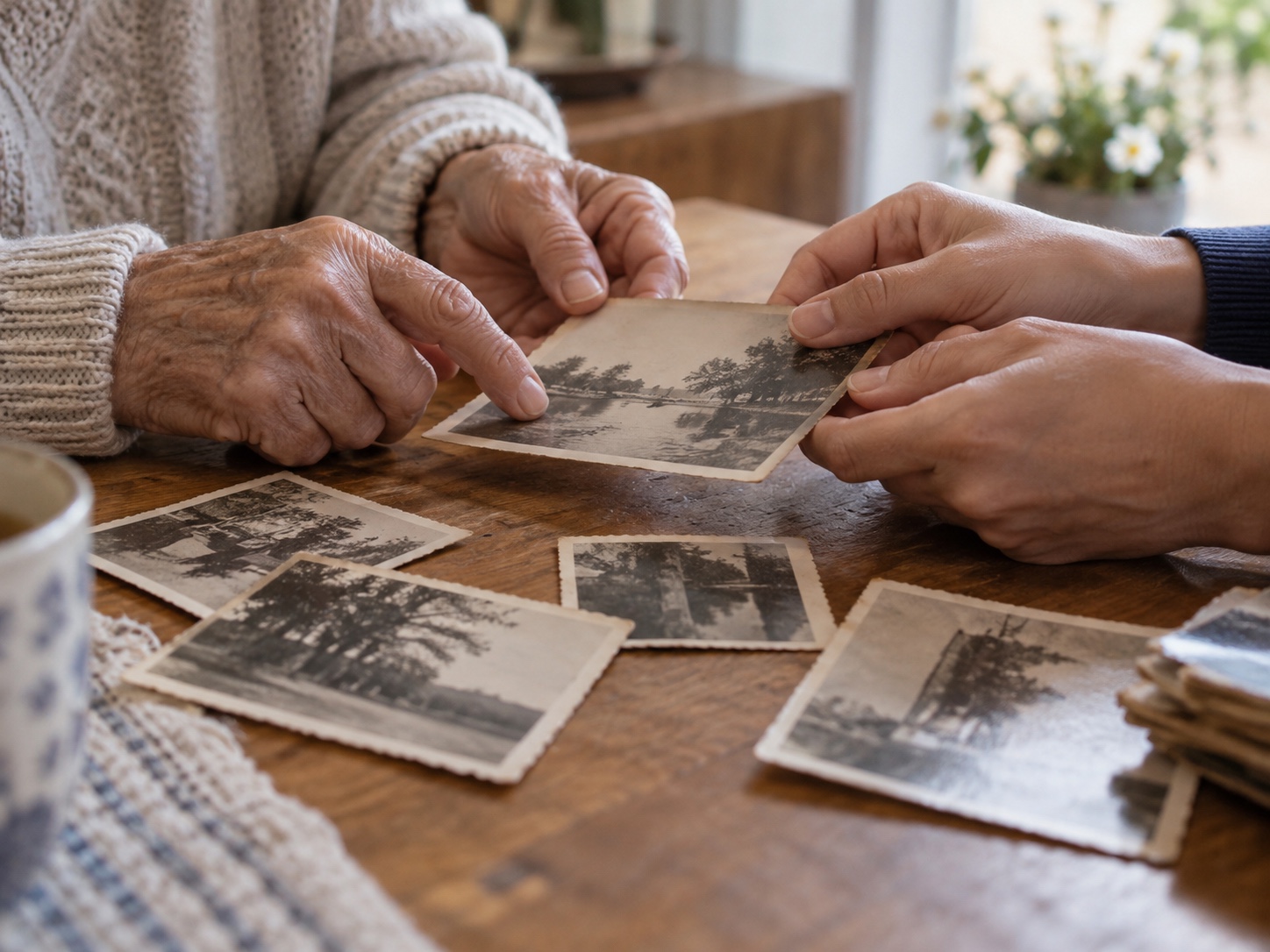
Use a familiar photograph or object as an invitation. Suggested wording: “There's a big garden here; I like the colors.” Listen if the person wants to talk. Avoid turning it into a quiz. Everyday reminiscing is distinct from structured reminiscence therapy.
Based on: Alzheimer's Association · Reminiscence and Reminiscence Therapy
Three original activity invitations
These are original prompts, not a tested activity program. Adapt materials and support to the care plan, language, vision, hearing and hand use. Offer one invitation; “not today” is useful feedback, and the time need not immediately be filled.
- “Shall we choose one photo for this week's album?” A look or a gesture can express a choice.
- “Which headline interests you?” Read a short item if wanted.
- “Would you help choose the napkin colors?” Let the choice have a real effect.
Use what you learn next time
Suggested note: offer, choice, support needed and useful detail. Example: “Chose two photos; preferred looking quietly; asked to stop when visitors arrived.” Share new preferences without treating them as tomorrow's obligation. Leave room for rest and spontaneous connection.
Sources & further reading
- ActivitiesAlzheimer's Association
- Art and MusicAlzheimer's Association
- Reminiscence and Reminiscence TherapyAlzheimer's Association
- The Fundamentals of Person-Centered Care for Individuals With DementiaThe Gerontologist / Alzheimer's Association
Sources checked on 28 September 2026. Edited with AI assistance; not independently professionally reviewed.
Everyday activity ideas, not cognitive treatment, rehabilitation or a promise of improved memory. Follow individual guidance; physical assistance and equipment require appropriate training.